Kanoko: the fawn spot pattern from shibori tie-dye
Make a Kanoko wallpaper in your colors
At a glance
| Japanese name | 鹿の子 (かのこ, Kanoko) |
|---|---|
| Motif | Spots of a young deer |
| Wish it carries | Abundance, youthfulness |
| Season | All year |
| Where you see it | Shibori kimono, hair ornaments |
What it looks like
Kanoko is a field of small rounded squares, each with a dot in the middle. The look comes from kanoko shibori, a tie-dye technique in which tiny points of cloth are bound with thread before dyeing, leaving pale spots.
History
The name means “fawn,” because the spots resemble those on a young deer. Kanoko shibori takes great skill and time, and fully tie-dyed kimono have long been seen as a luxury. Printed and drawn versions of the pattern made the look available to more people.
What it means
The many small spots are linked with abundance and prosperity, and the soft, rounded shapes give the pattern a gentle, youthful feel. It is often used for children’s and young women’s kimono.
How it is drawn
Each spot is a square with curved sides and a small circle in the middle. The rows are set close together and every other row is shifted by half a spot, just like the bound points of real shibori.
Ways to use it
Red and gold is the traditional kanoko look. Purple and white is soft. Teal and cream makes a quiet pattern for a desktop background.
- Open the maker with Kanoko already selected.
- Pick one of the color sets, or choose your own ground and line colors.
- Choose a size: phone, desktop, video call, square or A4 print.
- Download it as a PNG, or as an SVG if you want to edit or print it at any size.
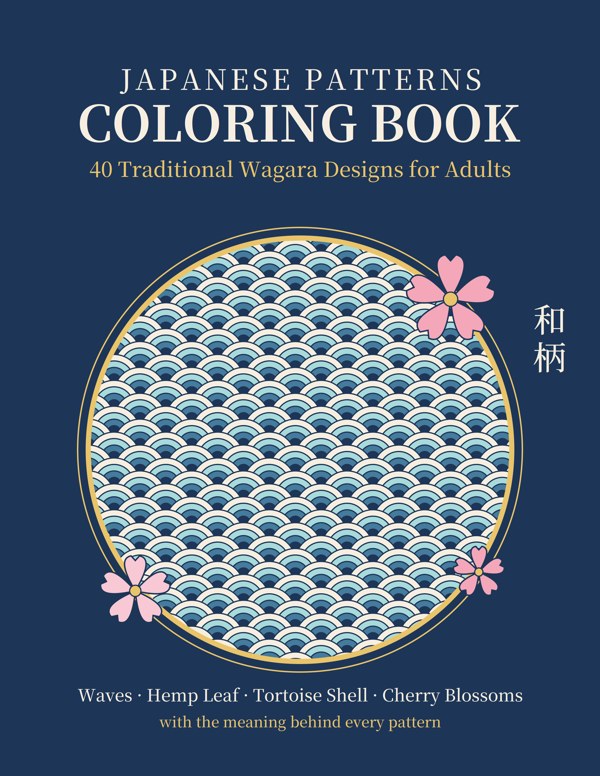
Kanoko and 13 other patterns are in our coloring book, with the meaning behind every design.
See the coloring book on Amazon